A lock that won't turn or a gate that won't swing is a common winter problem. In most cases, the hardware is fine. The issue is the lubricant.
Oil works well in mild weather. When temperatures drop below freezing, it can cause the same sticking and binding it was supposed to prevent. Dry graphite holds up better in the cold, and the reason comes down to how each one behaves once the temperature falls.

Why Oil Struggles in Freezing Weather
It thickens. Oil gets more viscous as it gets colder. A light oil that flows freely in July can turn tacky by January. Parts that move easily in summer start to drag, and small mechanisms like lock pins may not seat properly.
It attracts grit. Oil stays wet, so it catches whatever touches it: dust, road salt, sand, and metal particles. Over time, that buildup turns into a gritty paste. The paste wears down moving parts and packs into keyways, hinge pins, and latches.
It can hold moisture. A wet, dirty film can trap water. When that water freezes, a lock or latch can seize completely.
Adding more oil usually makes things worse, because it brings more grit with it.
Why Dry Graphite Works Better
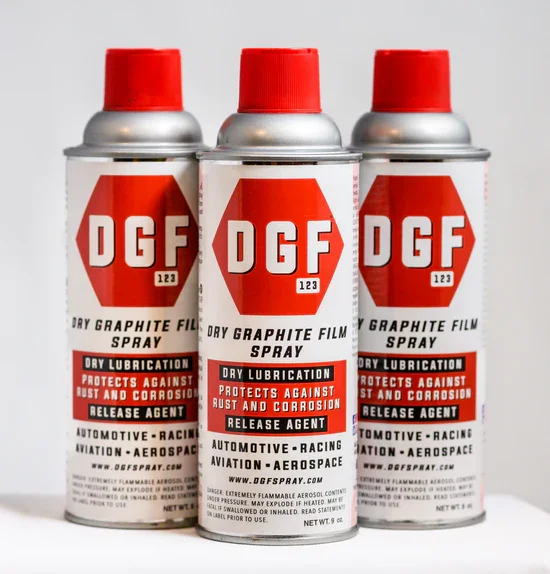
Dry graphite lubricants leave a thin, dry film on the surface after the carrier evaporates. Graphite is made up of layers that slide easily over one another, which reduces friction between moving parts.
That dry film solves the problems oil creates in winter:
No thickening. There's no liquid to stiffen, so the film performs about the same in a cold snap as it does on a mild day.
No grit buildup. A dry surface doesn't catch dust, salt, or debris the way a wet one does.
Less trapped moisture. Without a sticky residue holding water in place, there's less chance of ice locking up the mechanism.
Clean application. Nothing drips, runs, or transfers to hands, keys, or clothing.
Where to Use It
Locks. Pin tumbler locks have tight tolerances. Oil and grime can keep pins from seating, which leads to stuck keys and locks that won't turn. A dry graphite film keeps pins moving freely without gumming up the keyway. This applies to door locks, padlocks, and outdoor cabinet and utility locks.
Hinges. Exposed hinges on doors, access panels, and enclosures deal with wind, wet weather, and debris. Dry graphite reduces squeaking and binding without leaving a wet coating that collects dirt.
Gates. Gate hinges, latches, and slide tracks see a lot of outdoor exposure. Oil on these parts tends to pick up sand and road salt fast. A dry film keeps them operating smoothly through the season with less cleanup.
How to Apply It Before Winter
Clean off old oil and grease. Use a degreaser or solvent to remove existing lubricant and dirt. Graphite won't perform well on top of an oily, gritty layer.
Let the parts dry completely. Any leftover moisture can freeze later.
Apply a light coat. Spray into the keyway, along hinge pins, and onto latch and pivot points. A little goes a long way.
Work the mechanism. Turn the key, swing the door, or open and close the gate several times to spread the film.
Let it set. Give the carrier time to evaporate before the part goes back into heavy use.
The best time to apply it is in the fall, before the first hard freeze. A quick touch-up midway through winter helps on high-traffic or heavily exposed hardware.
The Bottom Line
Oil thickens and collects grit in the cold. Dry graphite doesn't. For locks, hinges, and gates that need to work all winter, a dry film is the more reliable choice.
DGF Spray offers dry film lubricants built for demanding conditions. Browse our products or contact our team to find the right fit for your equipment.